

Get the jump this spring on warm-weather lawn weeds
By Mike Hammer
WSU Chelan/Douglas County Master Gardener
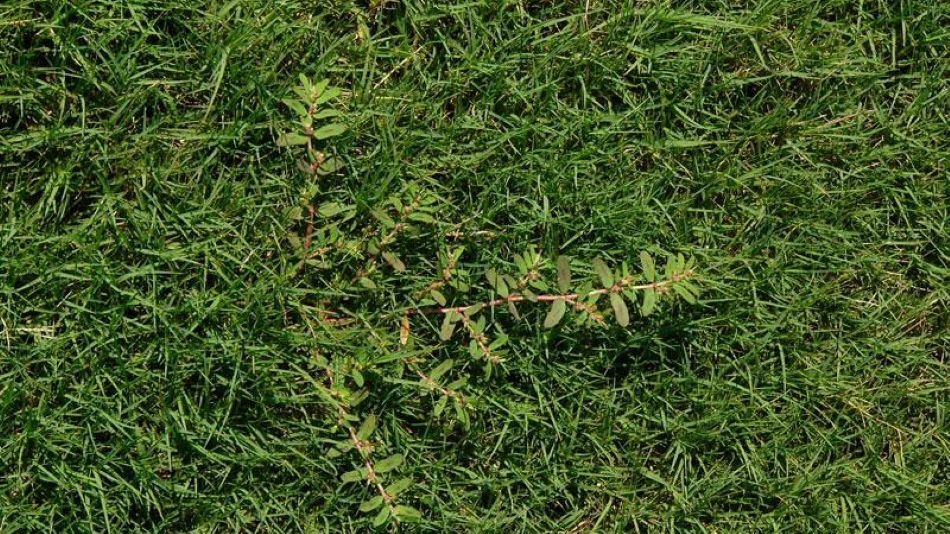

Last summer, were you troubled by crab grass or spotted spurge in your lawn? If so, now is the time to take action to prevent a repeat performance by these annual, warm-weather weeds. Annual means they grow new each year from last year’s seed and warm weather means these seeds germinate after the soil warms, usually early June.
These weeds thrive in the warm to hot temperatures of July and August, which is unfortunately the same time that our desirable cool-weather lawn grasses, such as blue grass and fescue, struggle.
During 2025, we had 81 days with a high temperature above 86 degrees at the WSU Tree Fruit Research & Extension Center in Wenatchee; almost every day in July and August was above 86 degrees. So, it is not surprising that these weeds did well, which also means they produced a good crop of seeds for this year.
The most effective thing we can do to deal with these weeds is to eliminate them as soon as they germinate. For this we can use a pre-emergent herbicide that prevents the seeds from developing into mature plants. To be effective, it must be applied before the soil temperature warms enough to trigger the seeds.
Crabgrass and spurge start to germinate when the top 1 inch to 2 inches of the soil reaches 55 degrees with full germination at 60-70 degrees. You can measure the soil temperature with an inexpensive probe thermometer, or you can use our rule of thumb — “when the forsythia blooms” — to time your application. (Forsythia are the shrubs with yellow flowers that bloom before their leaves appear.) Keep in mind that warmer areas, such as south-facing slopes, may need earlier treatment.
When you go shopping for pre-emergent herbicide look for words like “preventer” or “control” in the label. The usual broadleaf weed killer or weed and feed products are not pre-emergent and will not work at this time of the year. There are three pre-emergent herbicides available to homeowners and there are some differences between them. Pendimethalin is economical and effective when applied at the proper time but may need a second application after at least six weeks. Prodiamine (Barricade) remains effective the longest but must also be applied at the correct time. Dithiopyr is not as critical for application time — it can be a little late — but does not last as long as Prodiamine.
When selecting a product, look at the label for the active ingredient; this will usually be in quite small print. Pendimethalin and Dithiopyr should be readily available in stores in the area; you may have to search a bit for Prodiamine.
It is best to use a single ingredient product for crabgrass control. The optimal time for crabgrass prevention is too early for fertilizing as well as for broad leaf weeds like dandelions. With a pre-emergent-only product, you will not have to be as careful about shrubs, perennials or flower beds near your lawn.
Most importantly, read and follow the label instructions for size of the area to be covered, application rate and protective clothing. A rotary spreader is the usual application method. Smaller areas can use a hand spreader. Ensure that the application covers the edges of the lawn, such as along driveways and sidewalks since crabgrass tends to first establish in these locations. Remove pendimethalin from adjacent areas as it can stain. Also, follow the instructions for timing of a follow-up watering to incorporate the material into the soil. Do not dethatch or aerate the lawn after applying the herbicide. Follow the instructions and limitations for a second application.
One last label-related note: Be sure to check the label to learn about toxicity to kids, pets and wildlife before applying any herbicides.
Proper lawn care throughout the summer will help control these invaders as they thrive in thin lawns. Fertilize in May and June, water regularly (at least 1 inch per week), and raise your mower from 2 1/2 inches to 3 inches or even 3 1/2 inches in July and August. This mowing height is especially effective against spurge as the taller grass “shades out” the seedlings. Mowing at 2 inches looks nice but invites unwanted species. Hand dig or pull individual plants if there are just a few before they go to seed.
Do not give up if you do not get complete success in the first year. Two and perhaps three years are often needed to substantially eliminate crabgrass. Ask me how I know.
If you need more information, email us at askamastergardener@chelandouglasmg.org or visit our in-person clinic at the Sagebrush Room in the Wenatchee Public Library every Monday from 1 to 4 p.m.
A WSU Chelan and Douglas County Master Gardener column appears weekly in The Wenatchee World. To learn more about your local Master Gardener program, visit bit.ly/MGchelandouglas or call (509) 667-6540.