

Why we need to eliminate the Tree of Heaven
By Bonnie Orr
WSU Chelan/Douglas County Master Gardener
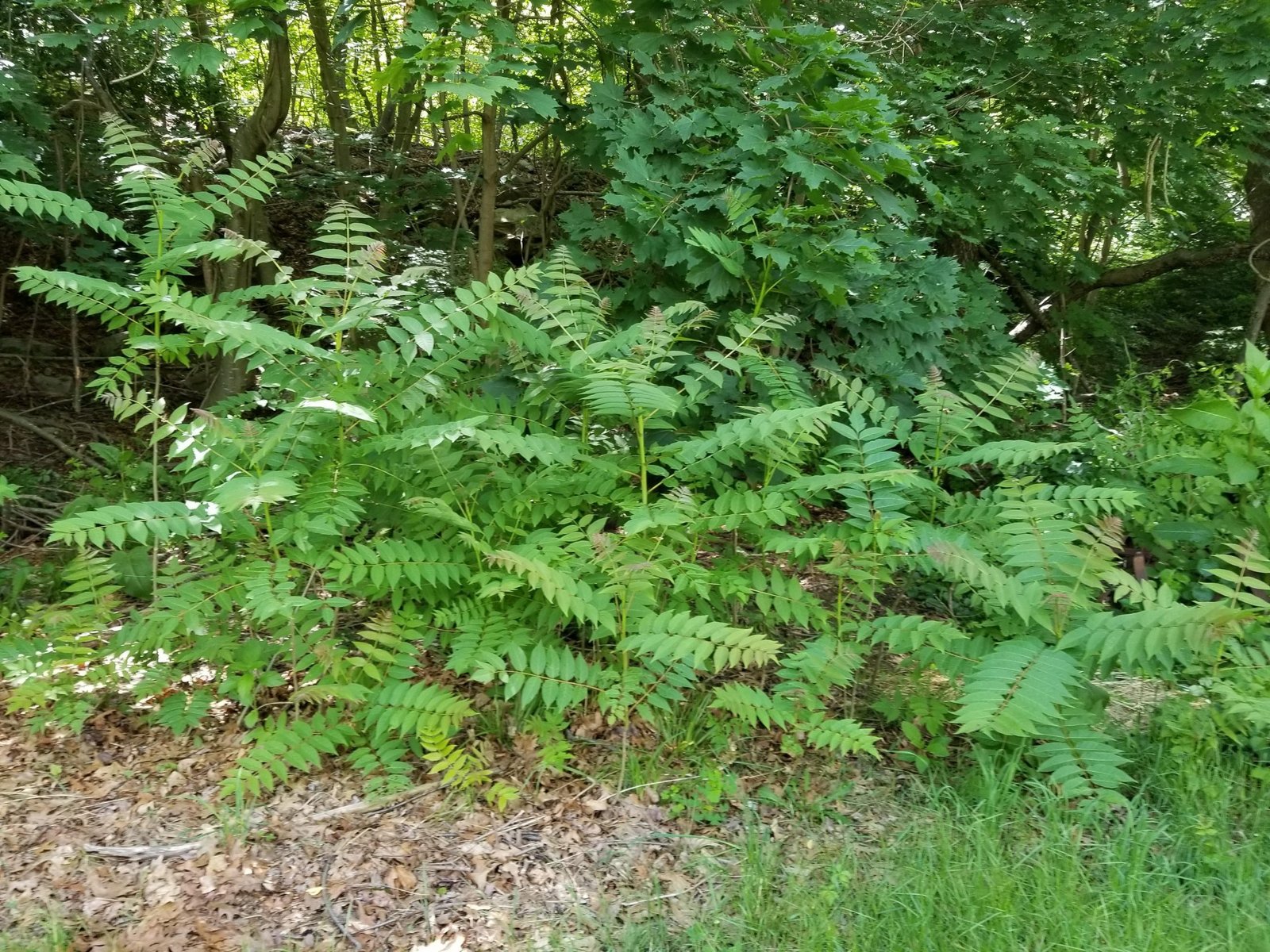

Did you ever read the book or see the classic movie, “A Tree Grows in Brooklyn”? The tree featured in the book is Ailanthus altissima, a tree brought to the US from China for its “beauty.” Nothing was known about how aggressively this smelly tree spreads. The tree is casually known as a “trash tree.”
People seldom plant Tree of Heaven in their yards. It grows in uncultivated places, in disturbed land, near abandoned buildings, and in cracks in sidewalks. One tree in a neighborhood can produce enough seeds and suckers to populate several square blocks.
What can you do? You can talk to public officials to urge them to remove the Tree of Heaven from public lands, especially along waterways, and you can consider the ways that you can eliminate this tree from your yard.
Here is why it is urgent that we eliminate this tree from our landscape. The Washington Invasive Species Council wants to have these unwanted and unloved trees eliminated from the landscape because that is the most effective means of preventing the spread of a new insect pest, the spotted lantern fly, which like the tree, comes from China.
The spotted lanternfly uses the Tree of Heaven as a host. The lanternfly sucks the sap from stems and new growth of ornamental trees such as maple, oak, pine and willow and fruit trees, including apples and grapes. It lays its eggs on the smooth bark of the Tree of Heaven. It is a remarkable-looking insect that is brightly colored, but we do not want to see it in Chelan and Douglas counties. In eastern states such a Pennsylvania and Ohio, the spotted lantern fly has destroyed numerous fruit crops such as grapes and blueberries. It also attacks tomatoes in home gardens. Any soft fruit is a potential target.
So, what is a short-term management of this pest tree?
Cut down any Tree of Heaven that lives on the north and east sides of your property first since trees in other areas of your yard provide your shade. Do this before the trees bloom and send off up to 350,000 seeds per tree. It is best to kill the tree with herbicide before you cut the tree down or the tree will send up lots and lots of suckers up to 50 feet from the tree. Later, a replacement tree can provide the shade for the west and south sides of your property when you remove the trees of heaven.
It can be expensive to hire someone to cut down a tree. If you cannot cut them down or arrange to have them cut down, kill the tree with herbicide. There are a number of techniques. You can spray the leaves or the basal bark. You can hack the stems and squirt herbicide in the cut. July is the time to treat the tree with systemic herbicide.
Generally, it takes two years to totally eliminate the tree. After you have killed the tree and have selected not to cut it down, there are several options. First, it can become a snag tree for cavity-nesting birds. Or if it not too close to your house, you can plant rapidly growing vining plants to climb up the dead branches. Wisteria, native clematis and climbing roses will bloom colorfully. Even ivy, kept in control, can create a sense of green on the dead branches of the Ailanthus.
If you would like assistance with managing your tree-of-heaven, contact the Chelan County Noxious Weed Control Board or the Douglas County Weed Management Task Force. These organizations can offer site-specific recommendations for a tailored management plan that best fits the location and extent of the problem.
Contact the WSU Chelan/Douglas Master Gardeners at askamastergardener@chelandouglasmg.org for additional information and lists of herbicides to control this pest tree. They can also provide suggestions for replacement trees.
Next month, I will write about eliminating the spotted lanternfly in case it arrives in the Northwest.
A WSU Chelan and Douglas County Master Gardener column appears weekly in The Wenatchee World. To learn more about your local Master Gardener program, visit bit.ly/wsucdmgprogram or call (509) 667-6540.