
Containers as a raised-bed gardening alternative
By Mary Fran McClure
WSU Chelan/Douglas County Master Gardener
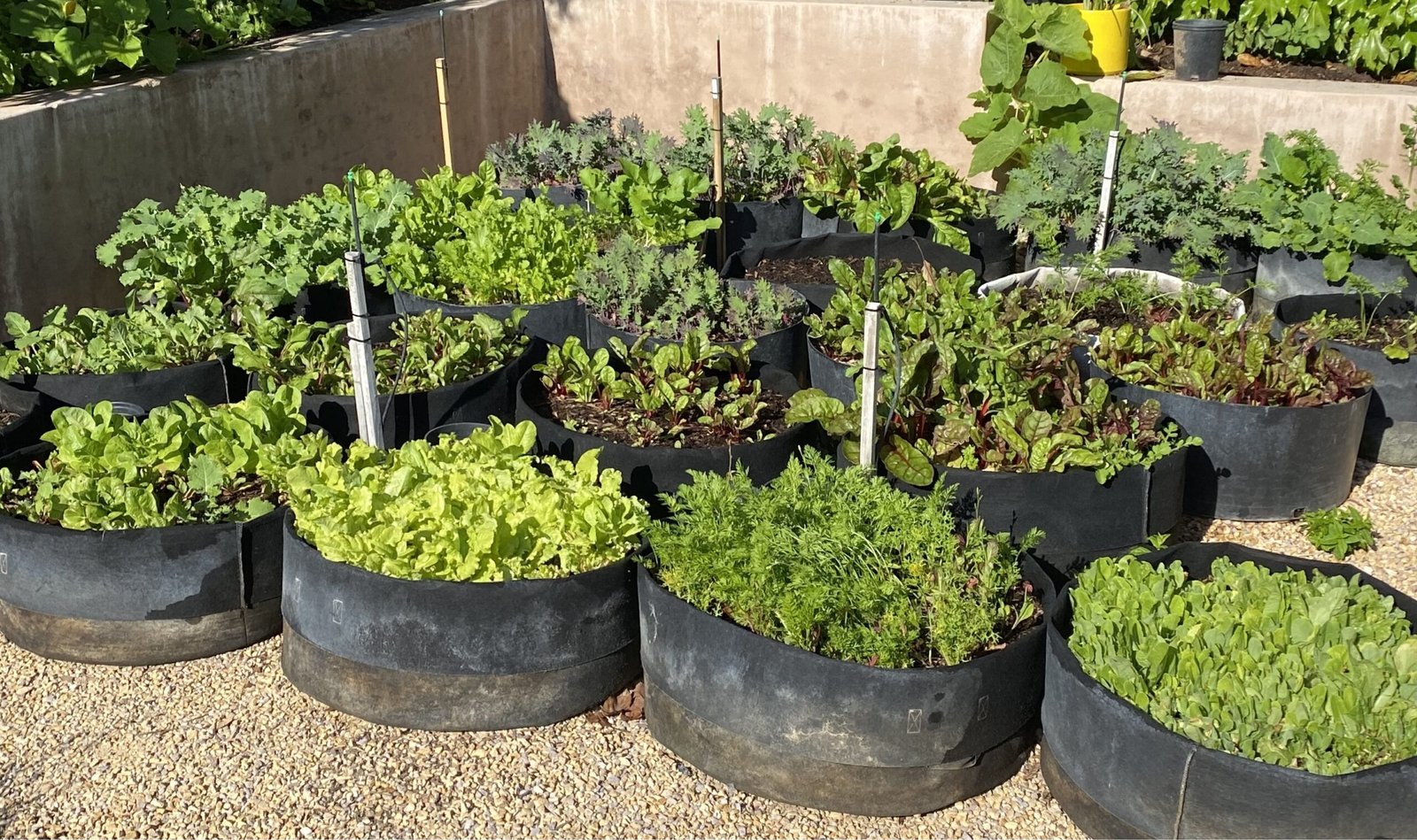
ready for picking. – Provided photo/Mary Fran McClure

By Mary Fran McClure
WSU Master Gardeners
We naturally think of growing great fresh picked leaf lettuce, tomatoes, herbs and the like in raised beds, but there are alternatives if you have limited space. Good-sized containers allow you the pleasure of growing food crops. They’re moveable and great for patios or smaller areas.
Whatever your limited space, I’ll bet you can find containers that fit nicely onto your available space on a sunny patio or other small, outside areas. Although pottery and metal containers are expensive, they can last for years if given winter protection. Be sure whatever containers you choose have good drainage holes and are as large as you can handle.
I grow daffodils in a container and situate them for maximum appreciation at bloom time and then move them out of the away during their less-than-attractive rejuvenation cycle.
Tropical cannas are in another group of my large pottery pots. Their lush leaves and flowers enhance each side of the garage for summer appreciation. After the first frost in fall, their foliage is cut back and moved to winter over in the garage. They wouldn’t survive our cold winters left outside.
Grow bags are another group of interesting containers to consider. These large, felted fabric containers are made of recycled fibers and bottles. Cheaper than pottery, they’re unbreakable, long lasting and offer aeration and versatility. Check big box stores or the internet for sources.
My stepson, Charles McClure, is a fan of grow bags. Charles is a landscape architect, so he knows his plants and how to utilize small spaces. With a small backyard, he learned about grow bags and has been pleased with growing a lot of food in them for several years. He places them on a graveled area for good drainage and likes that they’re very easy to maintain.
He uses wide 50-gallon sized containers and folds them over to grow his greens and other shallow rooted herbs. Used this way, they measure 36 inches across and 12 inches high.
I visited fellow Master Gardener Bonnie Orr when she told me she had been given an unused grow bag. We agreed its small size makes it questionable for growing plants in our summer heat and low humidity. We discussed how the porosity of grow bags might make them questionable in our dry, hot climate.
I’m confident during our shoulder seasons of cool weather they’d be great for leaf lettuce and other crops. Herbs and vegetables that do not need as much constant moisture as tomatoes and peppers might do fine in summer, especially if containers are large, folded over and bunched together.
Grow bags are reuseable. At the end of the season, my stepson empties, folds and packs them away in his garage for next year.
“I have two basic ways of growing,” Charles explains. “For one, I like planting one vegetable or herb in a round, such as I do four rounds with just carrots of different types. Then (I do) a couple with two types of onions, beets, lettuce, spinach and other compatible plants. The visual is very nice. All the different colors and textures in a pattern.”
He mixes seeds in a cup and sprinkles them on the rounds. After lightly covering the seeds with soil, he lets the various seedlings compete. He cautions planting kale and other greens that grow quickly because they overtake and smother those smaller plants.
His watering system is automatic, with small micro sprinklers mounted on stakes above his crop that automatically water the container group. Some fat bamboo sections were given to him and this year — after sealing their tops to prevent deterioration — he plans to attach them to his upright sprinklers.
“I pull a ton of vegetables out of my yard,” he says. “I really enjoy this.”
We have the advantage of a warmer climate for growing tomatoes, peppers and other heat-loving vegetables. They do well in large containers or raised beds with ample water, good soil and drainage, plus a good measure of sunshine.
Whether you have a small growing area or large garden, we gardeners appreciate the opportunity to enjoy growing and enjoying our own fresh herbs and vegetables.A WSU Chelan and Douglas County Master Gardener column appears weekly in The Wenatchee World. To learn more about your local Master Gardener program, visit bit.ly/MGchelandouglas or call (509) 667-6540.