
Record-keeping in your landscape makes gardening easier
By Mary Fran McClure
WSU Chelan/Douglas County Master Gardener

The level of detail gardeners keep about their landscapes varies. Some maintain daily journals noting plant emergence, high and low temperatures, weather, seed planting dates, soil temperatures and other observations. Others focus on day-to-day enjoyment, making limited notes while letting nature take its course.
Most gardeners probably fall somewhere in between. Plants grow, temperatures fluctuate and insects, both helpful and harmful, come and go. Gardeners grumble but still appreciate their landscapes, no matter the challenges.
With that in mind, here are a few record-keeping ideas that might help.
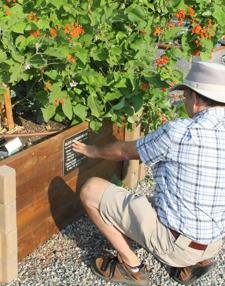
Labeling plants is a long-term challenge. Permanent markers on tags may last a year before fading. Engraved markers are more durable and easy to read but can be expensive. Garden manager Kate Bratrude orders engraved labels for the Community Education Garden from Sunshine Engraving in Florida at engravedplantlabels.com.
One of my best methods of record-keeping is carrying around a handy camera and notepad. Take a photo and then record the information such as plant name, location, date and other helpful notes. Most gardeners carry cell phones, making it easy to record photos for later reference. A waterproof notepad and pencil are useful on rainy days.
In addition to written markers, photos can be used to label plants in lineups. Three ornamental cherry trees shade my row of hostas from left to right. I take multiple photos, labeling each hosta in the photo. That way, if I lose labels stuck in the ground, I still have a record of those plants. Photos also help track herbaceous perennials even in winter when the ground is bare.
Photographing plants in different seasons helps protect bulbs and dormant plants in winter. I enjoy planting tulips along the outer perimeter of two raised beds, providing spring beauty before vegetable crops are planted or while they are still small. Hot-weather crops such as tomatoes, peppers and cucumbers go in later, toward the center of the beds, allowing tulip foliage to complete its rejuvenation cycle.
Once soil warms in May or June, she sprinkles marigold seeds where tulips grow for summer color.
Keeping a binder or journal is also helpful. Some gardeners use a three-ring binder, a clipboard, or a combination of both. A friend keeps a few lined sheets of paper and pencil on a clipboard handy for notetaking as he heads outdoors. These pages eventually get added to his multi-year binder.
Notes can include germination dates, fertilization, pest control measures, flowering and harvest dates. Sketching raised beds on paper to mark where garlic or cucumber seeds are planted can prevent accidental coverage when planting new crops.
Some gardeners track soil temperatures to better time planting, pest control and compost management. Records make gardening easier, more accurate and more interesting. That goes for whatever your comfort level is of record-taking.
A WSU Chelan and Douglas County Master Gardener column appears weekly in The Wenatchee World. To learn more, visit bit.ly/MGchelandouglas or call 509-667-6540.