

When is it OK to rake in the spring?
By Julie Banken
WSU Chelan/Douglas County Master Gardener
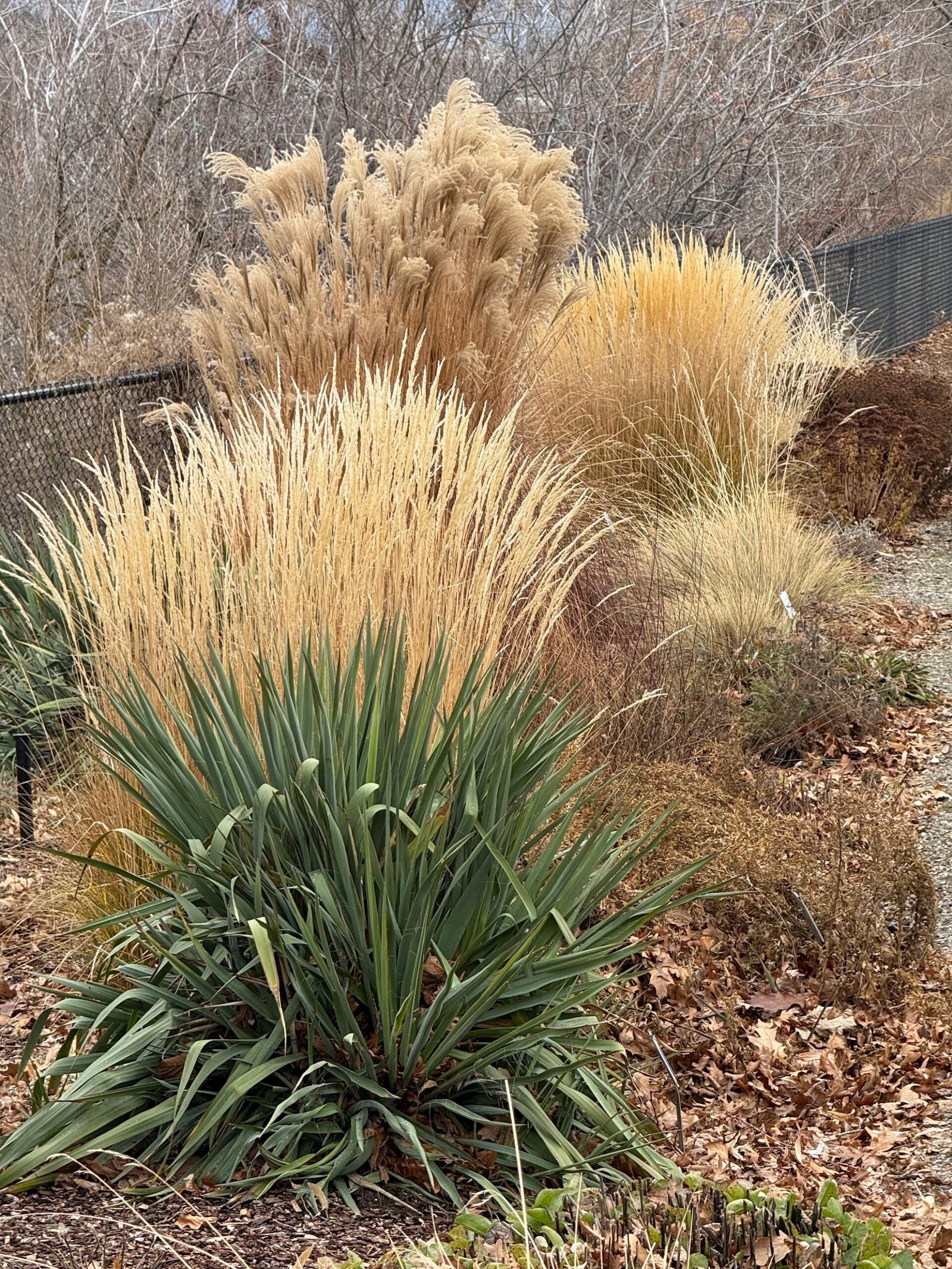

Piet Oudolf is a Dutch landscape designer who is famous for creating gardens that mimic nature. Oudolf selects plants for the way they look throughout their entire life cycle, not for their appearance during the few weeks when they are in flower. His plants change with the seasons, coming to life when the snow melts, growing fuller and taller throughout the summer, then they bloom, go to seed and die back. Not only does he intentionally leave plants to wither, his philosophy is this: a plant is only worth growing if it looks good when it is dead.
I like to think that Piet Oudolf would appreciate my yard, at least a little bit. In this weirdly-warm, snow-free winter, it is every shade of brown. Remnants of last year’s coneflowers have turned dark, picked clean of seeds by birds and wind. Sunflower stems still reach for the sky. Leathery oak and papery sweet gum leaves line the driveway and carpet the beds.
I must admit that with no snow on the ground, I feel the call to put on my gloves and “clean things up” in my yard, especially when there is not much else to do outdoors. It is important to resist; a natural-looking yard is not a sign of neglect. Dead plants, whether they look good or not, are vitally important to the garden ecosystem.
Dry stems may hold the chrysalis of a butterfly or a new generation of native bees. Ground beetles, spiders and other garden predators may be waiting out the winter beneath layers of fallen leaves. Last year’s vegetation creates precious habitat, providing shelter, insulation and food to countless beneficial creatures that call the garden home. Removing old foliage too early destroys their shelter, leaving those that aren’t inadvertently tossed into the yard waste bin with a slim chance of survival.
Max Ferlauto, a graduate student at the University of Maryland, recently showed how important leaf litter is to overwintering insects and spiders. Over two seasons from April to July, he compared the number of arthropods that emerged from plots of raked versus unraked yards. His results were surprising: where leaves were not removed, he found that up to 18,000 individuals emerged from just one square meter of yard! They included moths, butterflies, spiders, beetles, parasitic wasps, flies and other small arthropods. Removing leaves, on the other hand, significantly reduced their overall diversity and numbers, cutting some of their populations by more than half.
Given the importance of leaf litter to the ecosystem, is it ever OK to rake in the spring? Ferlauto expected to see a date at which emergence peaked, but instead found that there was no time when insects and spiders stopped emerging. He also noted that even after they emerged, they returned to the leaf litter to reproduce. In short, this study showed that wildlife depends on leaf litter all year, not just in winter.
Leaving the leaves year-round isn’t always possible, so a good rule of thumb is to clean up yard debris strategically. Wait to rake until daytime temperatures are consistently above 50 degrees. This gives most overwintering insects time to complete their life cycles. Clear lawns and pathways early but try not to disturb flower beds until late spring. In general, rake where you must, and save leaves where you can.
Timing is trickier with plants like yarrow asters, and penstemons that die back to the ground each year. Removing the old stems of these herbaceous perennials can be difficult if new shoots have already grown into them.
To avoid damage, cut last year’s stems back once new growth is clearly visible. Take care not to cut everything to the ground, however. Leave hollow stems standing at different heights to provide nesting sites for stem-nesting bees. Save the cut stems somewhere in your yard until mid-May, when you are sure the insects have moved out.
Make a compromise with Mother Nature. If one square meter can support 18,000 insects and spiders, leaving just a small area of your yard untidied can make a big difference to wildlife. Remember that beauty is more than skin deep, even for gardens. Winter is a vital phase, and dead plants can make especially beautiful landscaping when you know they support all kinds of life.
A WSU Chelan and Douglas County Master Gardener column appears weekly in The Wenatchee World. To learn more about your local Master Gardener program, visit bit.ly/MGchelandouglas or call (509) 667-6540.