

Magical orbs: August is tomato month
By Mary Fran McClure
WSU Chelan/Douglas County Master Gardener
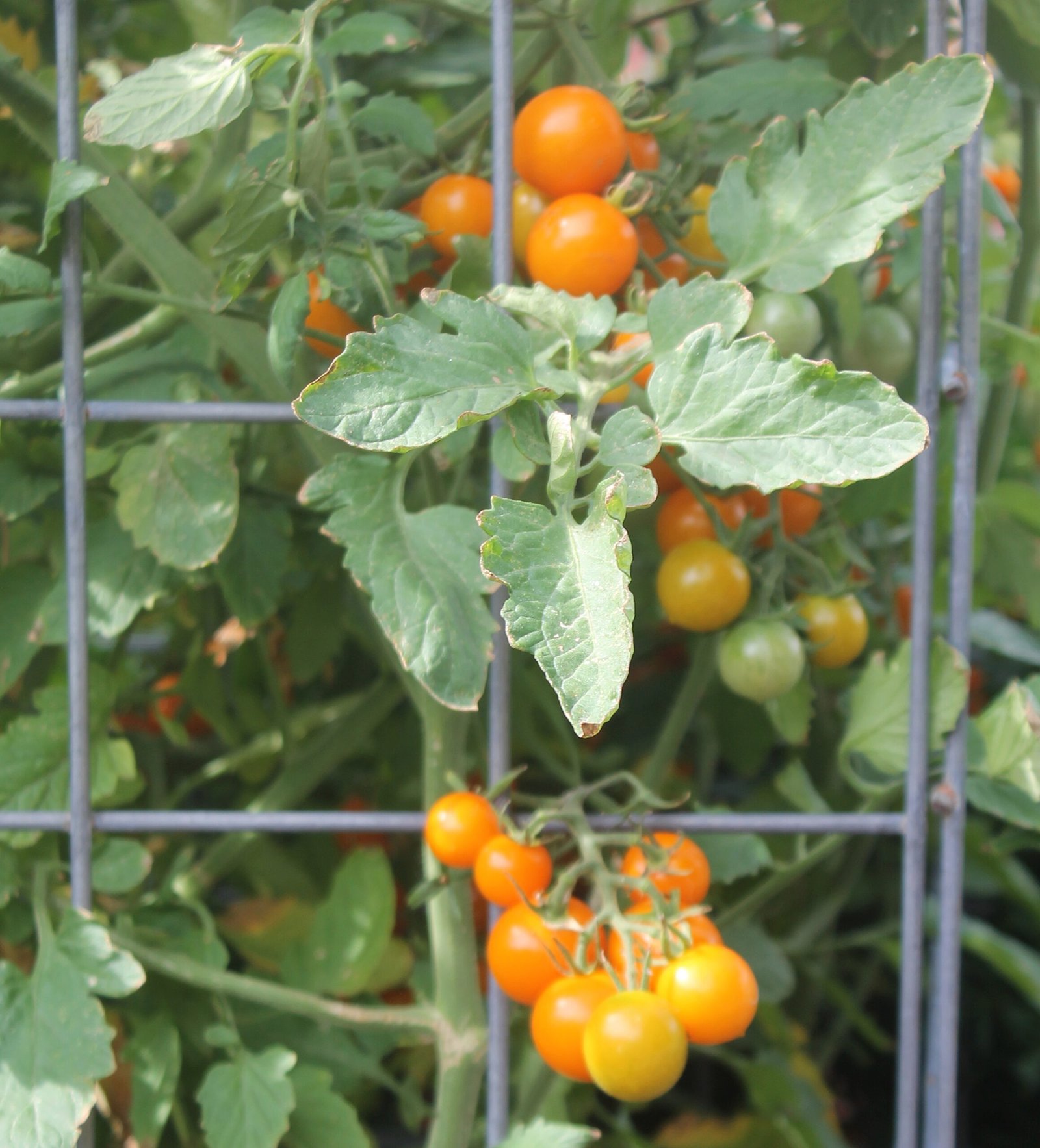

A warm (but not too warm) summer day paired with a juicy, just-picked tomato — that’s living!
Whether you choose an heirloom, hybrid, cherry or paste variety, each type is suited for different uses and appeals to different tastes.
Many tomato aficionados have favorites and even save seeds from their heirlooms for growing year to year. Heirlooms come in all sorts of shapes, sizes and colors. Some are lumpy, some are striped, and several have unusual names. There must be some interesting stories behind names like Abe Lincoln, Mortgage Lifter, Giant Monster and Hillbilly!
Most hybrids have quite logical names such as Better Boy, Super Fantastic and Celebrity. This group produces more uniformly during the season, while heirlooms tend towards sporadic production in large quantities.
The small, cherry-types are superb for eating right off the vine. Their names parallel with their smallish sizes, such as Tiny Tim. Those meaty, paste types, including San Marzano and Roma, are the favorites for making salsa.
Each type has its enthusiastic supporters and uses.
Another notable difference in tomatoes is the production length and plant size, grouped as determinates and indeterminates. Determinates produce a larger crop over a shorter time and then quit growing. They’re usually smaller, more compact plants than indeterminates.
Indeterminates are sprawlers, growing and producing over a longer season. They are larger plants and need more support and space.
Support is important for most tomatoes, and those little tomato cages available in stores are insufficient for most plants.
My favorite tomato cages have 4-inch wire spacing, making it easy for reaching in and picking the fruit. Mine are remnant pieces of heavy duty fencing, I believe called hog wire. We purchased it from a farm supply and used it for fencing. For the tomatoes, each panel is about 2-feet wide and 4-feet high, wired together at the corners.
Tomatoes thrive in our warm summers, provided temperatures don’t climb too high. At temperatures around 90 degrees F., pollination becomes iffy. When temperatures remain above 90 degrees for several days or weeks, that means a decrease in young developing tomatoes.
I hope you read the helpful information correlating high temperatures and tomato production by fellow Master Gardener Mike Hammer. It was published in The Wenatchee World’s July 8 edition.
Our plant clinic invariably gets questions about those hard, dark spots at the blossom end of a ripening tomato. The most common reason is lack of regular watering. Tomatoes take in a lot of water, and don’t do well without constant moisture. Soil deficiencies are a less common cause, and a soil test will help guide you on that score.
If you suddenly spot chewed leaves on your tomato plant, most likely if you carefully survey the plant with a sharp eye, you’ll discover a green hornworm. They are cleverly disguised by blending in with stems and leaves. Pick them off and destroy them.
Keep a watchful eye on your developing tomatoes and you’ll appreciate enjoying fresh, flavorful tomatoes this month!