

Don’t Throw the Baby Out With the Bathwater: Protect soft-bodied arthropods in your garden
By Julie Banken
WSU Chelan/Douglas County Master Gardener
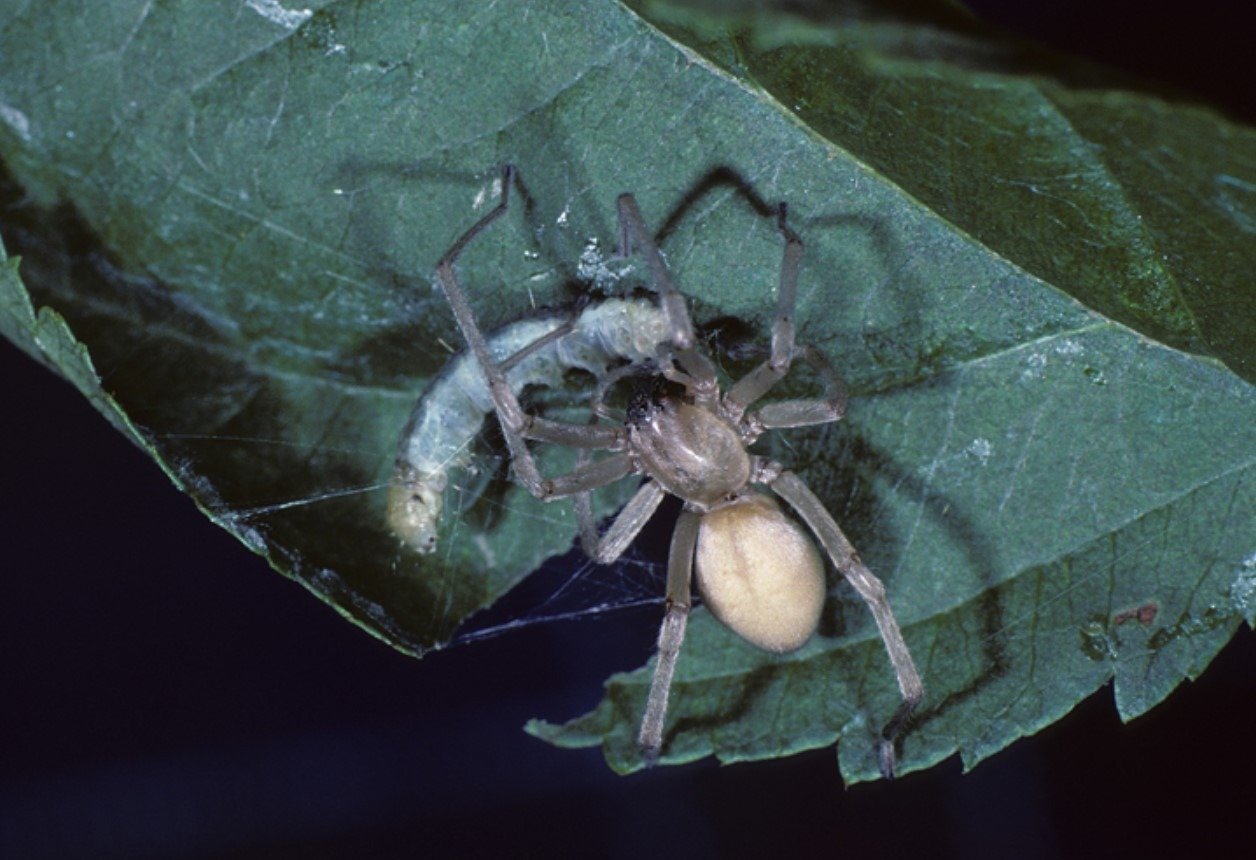

Of all the creatures that live in a healthy garden, arthropods are by far the most common. This phylum includes a diverse array of animals, from the six-legged insects and the eight-legged arachnids to the many-legged crustaceans, centipedes and millipedes.
Despite their differences, all arthropods share one important trait: an exoskeleton that surrounds them like a suit of armor. Exoskeletons get their toughness from sclerotized chitin that is sealed with a layer of wax. This watertight material covers every segment of an arthropod, from the mandibles on their heads to the tarsomeres on their feet.
Having a tough shell on the outside rather than a bony skeleton on the inside is one of the reasons arthropods are so successful. Exoskeletons shield them from predators and protect them from drying out.
Living inside a tough shell can have its drawbacks, however. First, it’s not so easy to grow when you are inside a hardened shell. Because their exoskeletons don’t expand, arthropods must “shed their skin,” or molt, in order to get larger. A one-size-too-small exoskeleton ultimately splits down the middle like a zipper, and a slightly larger arthropod must wiggle out. Depending on its thickness, it can take hours to days for a new exoskeleton to harden.
Even if an arthropod isn’t growing, a rigid exoskeleton can get pretty tight. Imagine what would happen if a knight in shining armor ate too much at one meal. It would be much better for him to have stretchy fabric covering his stomach instead of inflexible armor. Spiders, one of a gardener’s best allies, can relate. A spider’s diet includes all kinds of garden pests. When they eat, their abdomens must make room for large volumes of their liquified food. They must also accommodate their silk glands, and females need space for developing eggs.
Fortunately for spiders, they have a way to avoid building up too much pressure inside their expanding abdomens. They are called “soft-bodied” arthropods because while the rest of their bodies have a hard exoskeleton, their abdomens do not. Their abdomens are much less sclerotized, making them thin and flexible, and able to comfortably expand.
Some arthropods have traded away all their heavy armor for improved flexibility and the ability to easily molt. While they still have an exoskeleton, their cuticles are thinner, less sclerotized, or not hardened at all. Being soft-bodied comes with another advantage: because they spend less time waiting for their exoskeletons to harden after molting, they can grow and subsequently multiply quickly.
Sadly, soft-bodied arthropods have become synonymous with garden pests. The most well-known are aphids, thrips, whiteflies and mites. Many pesticides are designed to take advantage of the fact that these arthropods don’t have thick exoskeletons to protect them. Insecticidal soaps and horticultural oils easily dissolve their exoskeleton’s thin wax layer, causing them to dry out. Diatomaceous earth cuts through their soft cuticles, and growth regulators prevent chitin from properly forming.
Unfortunately, many of the soft-bodied arthropods that live in gardens are not pests at all, and the pesticides that target them don’t know the difference. Besides spiders, predatory mites and the agile, caterpillar-like larvae of ladybugs, syrphid flies, and lacewings are all soft-bodied, too, and their thin cuticles are no match for the pesticides designed to kill them. Like babies thrown out with the bathwater, beneficial soft-bodied arthropods can inadvertently end up as collateral damage when these pesticides are applied.
Does it matter if predatory arthropods live in your garden? If getting rid of the pests is the goal, why worry about the animals that eat them? After wiping a patch of earth clean with a bulldozer, the first plants to move in will be the weeds. Similarly, chemicals can remove the animal life in a garden, but the herbivorous pests will be the first to return. Without predators to eat them, their populations will grow unchecked.
It might seem counterintuitive, but protecting soft-bodied arthropods is often the best way to manage garden pests. Consider letting your garden ecosystem find its own balance by keeping it chemical-free. It can be argued that a healthy garden depends less on what you choose to eliminate, and more on what you choose to protect.A WSU Chelan and Douglas County Master Gardener column appears weekly in The Wenatchee World. To learn more, visit bit.ly/MGchelandouglas or call (509) 667-6540