

Cold frames for the planting wins!
By Lloyd Thompson
WSU Chelan/Douglas County Master Gardener

Cold frames can do so many things for you and your plants. They can extend a harvest and allow crops enough time to mature. Cold frames can also provide your early or late-season vegetables more time beyond the normal growing season. This could allow you from a few weeks to perhaps even a month or two longer growing season for the year. Cold frames can also help harden off those new transplants from cold and spring winds.
Cold frames allow you numerous gardening options that can extend your growing season. I set up cold frames early in the season to start warm-season crops earlier than I would in a traditional garden bed. Cold frames protect plants from cool night temperatures and help warm the soil. You can also use cold frames to plant cool-season crops in late summer for the fall.
The hotbed, or cold frame, is a rectangular box with the back higher than the front, covered with a transparent “roof.” The size and complexity of the structure depends on your needs and/or funds available. Recycled material such as scrap lumber and old window sashes may be used, reducing costs.
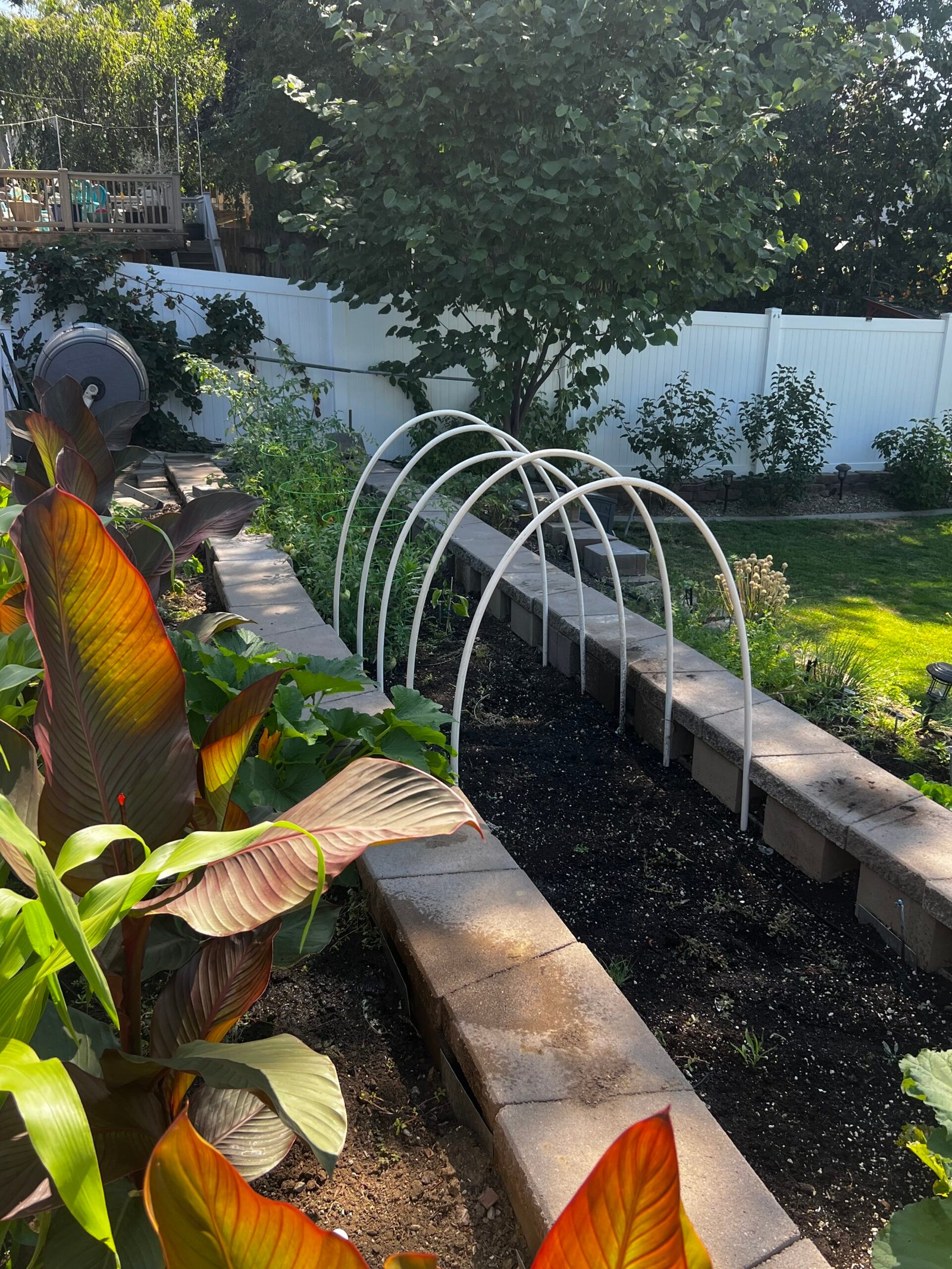
I have a south-facing garden that is terraced using cement stack blocks, this replaced the previous owners railroad ties. The blocks help hold heat and warm the soil early in the season.
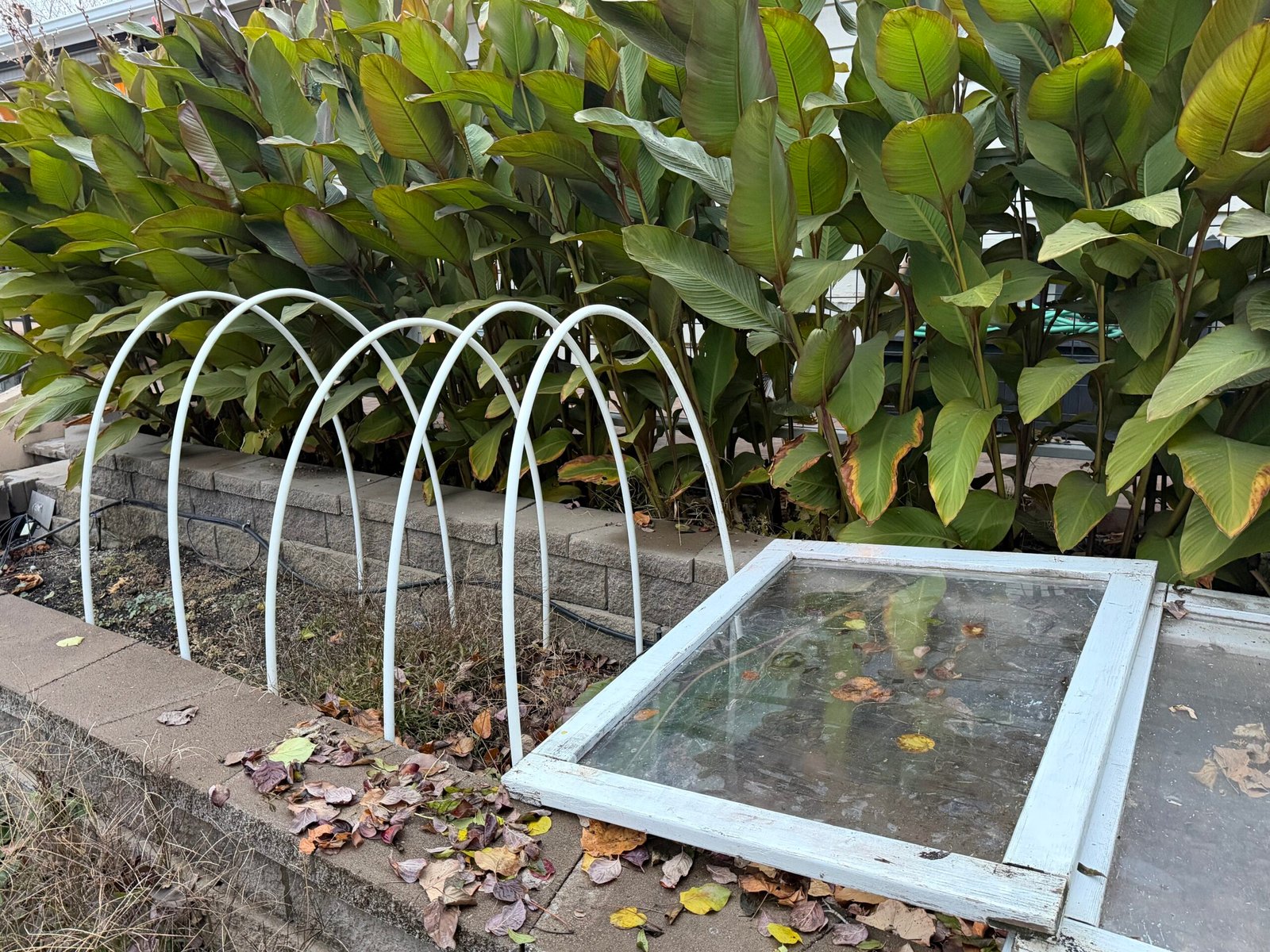
I use two types of cold frames. One is more like windows that sit on masonry block walls and provide protection from cold and increases temperature through thermal mass warming during the day, releasing the heat as the night cools.
The other system I use is a modified hoop greenhouse that uses PVC pipe, bent into hoops, and then covered in plastic. I use 10-foot PVC pipe so the wind isn’t as much of an issue than if it were taller. Stick two rebar stakes 18” or so, stuck in the ground about four or five feet apart. Then slide the end of your PVC pipe over the rebar and then bend the pipe so you can slide the other end over the other rebar stake. After all the hoops are set up, I use another piece of PVC pipe along the top to zip tie the hoops all together. A 2×4 on each side gives you something to attach the bottom to. I roll the plastic a couple of turns and then I staple it to the 2×4. I like to use 12-foot-wide plastic so I have extra length to play with. I usually use a single layer of polyethylene plastic at least 6 mils.
After the cool weather of spring passes, I leave some hoops up as a trellis for climbing vegetables to grow on. It can also work as a “secret fort” for the grandkids to play in during the summer.
The biggest issue I deal with are those really sunny days that can superheat the inside of your cold frame, so being able to vent the extra heat out is important.
For the window-frame style, a brick propped on its side allows the heated air to escape. Just remember to take it out later in the day. For the hoop-house style, being able to open and close the ends seems to work well. A remote-read thermometer inside the cold frame can be a big help in regulating the temperature. There are automatic options available; between the wiring and the controllers, however, it’s usually cheaper and easier to open things up manually. My suggestion is to start small and find a system that works for you, before building more extensive or elaborate cold frames that may not work as well as you thought they would. Issues to remember are the sun patterns in your garden, wind, ability to vent excess heat, material costs and the time it takes to get your system up and running when you need it.
A WSU Chelan and Douglas County Master Gardener column appears weekly in The Wenatchee World. To learn more about your local Master Gardener program, visit https://bit.ly/wsucdmgprogram or call (509) 667-6540.