
Don’t let your soil turn into dirt
By Julie Banken
WSU Chelan/Douglas County Master Gardener

Here is something to think about the next time you are out pulling weeds: unlike the soil on this planet, Martian regolith, the rusty-orange dust that blankets Mars’ surface, is completely sterile. The minerals on Mars only exist in insoluble forms and are therefore unavailable to plants. Even if Mars had liquid water, no plants could grow there, as Martian regolith offers nothing to sustain them.
Besides water, sunlight and carbon dioxide, plants require nutrients like nitrogen, phosphorus and potassium in order to develop. Plants must drink their nutrients; they must be dissolved in the water that is drawn into their roots. On Earth, these nutrients come from decaying plant and animal matter, which are decomposed and broken down to a soluble form by microscopic organisms in the soil.
Soil is not just where plants grow; it’s why they grow. A shovelful of healthy “earth” is a thriving place. A microscope would reveal it contains billions of organisms: algae, fungi, bacteria, nematodes, earthworms, microinvertebrates such as mites and springtails, and other small arthropods, all feeding off organic matter and each other. Together, they create an ecosystem that is vital for building soil structure and turning organic material into a source of nutrients for the plants that grow in it.
Without organic matter and microbes, Mars remains lifeless. Meanwhile, here on Earth, life abounds. The surface of our planet has soil that supports all kinds of vegetation: tall trees, woody shrubs, forbs and grasses, spongy mosses and too many others to list. There is almost no ground where plants don’t grow, thanks to the microbial communities in the soil beneath them.
Imagine the barrenness of the landscape on Mars! The fact that Earth’s soil allows plants to take root just about anywhere is nothing short of a miracle, but if you have a yard to care for, it’s easy to lose sight of this. Plants are so ubiquitous on Earth that, rather than marveling at their abundance, we need ways to stop them from growing.
Efforts to control rogue plants like weeds, however, can inadvertently solve one problem while creating another. One common way to prevent weeds from sprouting under shrubs and trees is to cover the ground with landscape fabric and a layer of bark or rock mulch. Landscape fabric is a permeable sheet of black polypropylene or polyester that blocks light to the ground below it, preventing weed seeds from germinating. Unfortunately, it blocks more than light.
The fabric’s pores let water pass through, but when these pores get clogged with debris, weeds will inevitably sprout on top of it, preventing water and air from reaching the living organisms below. Landscape fabric can also trap heat, effectively baking the soil. Worse still, it keeps organic matter out of the soil. Without fresh compost, the soil biota will run short of food. Ultimately, landscape fabric will break down into microplastics, which are impossible to remove.
An alternative to landscape fabric is to use herbicides to kill weeds, but chemical herbicides aren’t necessarily better. Herbicides don’t prevent water, air, and organic matter from reaching the soil, but they can still affect the soil ecosystem. Synthetic chemicals designed to interfere with plant cell biology can also be lethal or sub-lethal to soil-dwelling organisms.
Over time, both landscape fabric and herbicides reduce biological activity, turning living soil into lifeless dirt. Repeated rototilling, overwatering, and compaction also can take a toll on soil health. If the microbiome is gone and nutrients are no longer available for plants, it might seem like a good alternative to apply synthetic fertilizers instead. Unfortunately, their overuse can backfire. Repeated fertilizer applications increase the concentration of acid and salts in the soil, degrading it until it becomes inhospitable to microbes and plants alike.
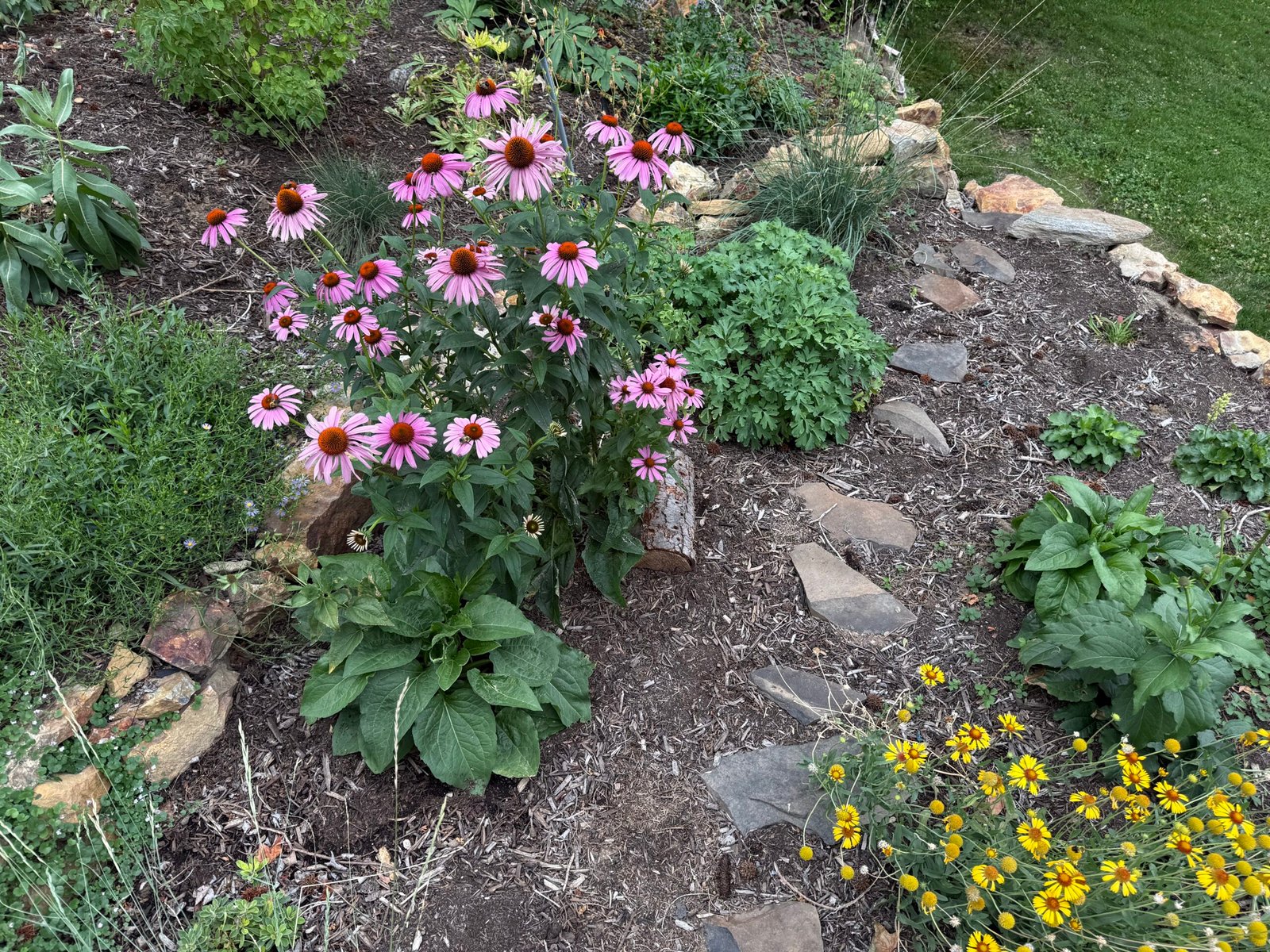
To keep the plants in your yard healthy, feed the microorganisms that live in the soil by adding organic matter regularly. Leave the leaves in your flower beds this fall and let grass clippings work their way back into your lawn. Instead of using landscape fabric to control weeds, let your soil breathe through a thick layer of light-blocking organic mulch. Finally, I suggest keeping your yard chemical free to protect the ecosystem at work in the earth below.
A WSU Chelan-Douglas County Master Gardener column appears weekly in The Wenatchee World. To learn more, visit bit.ly/MGchelandouglas or call (509) 667-6540.