

Hot-weather lawn care
By Bonnie Orr
WSU Chelan/Douglas County Master Gardener

The weather has made gardening more difficult this year. And lawns seem shabby. What to do? What to do?
I will give you the bottom line first. Wait until Aug. 15, when the days have shortened, and the nights are cooler. Be patient. The lawn will look better for a number of reasons.
Here is what not to do: Don’t fertilize; it stresses the grass plants. Stop overwatering. Just 2 inches of water per week is enough to keep lawns green.
Here is what to do: Raise the mower height to 3 inches. Perhaps only mow every other week since in the heat of the summer the grass plants grow very slowly.
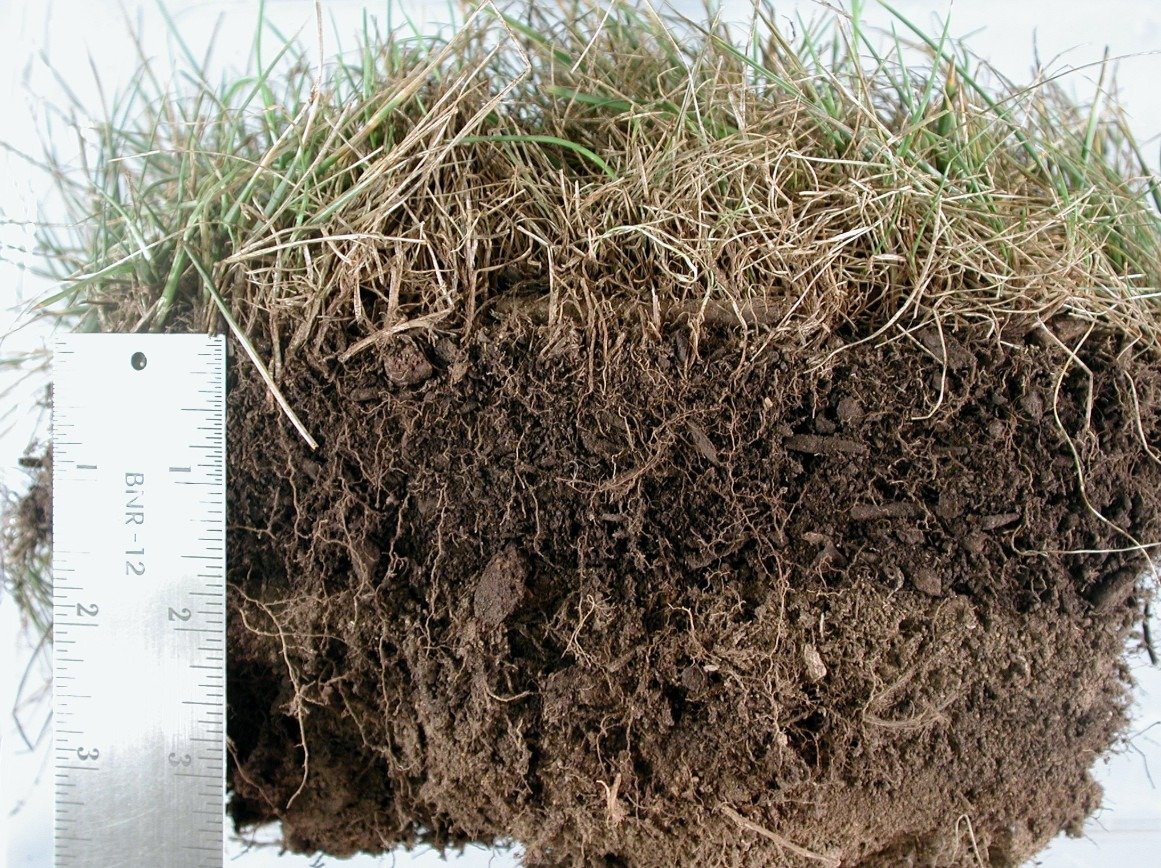
Your bad habits most likely have come back to haunt you. Yes, you have been meaning to thatch and/or aerate your lawn but have not gotten around to it. This is one of the most serious reasons why a lawn falters. When the thatch is more than 1 ½ inches deep, the dead grass stems and rhizomes form a mat that prevents water from reaching the grass roots — no matter how much water you pour on. In addition, thatch also creates the conditions for a lawn to grow short roots and weak grass blades because the water cannot seep down into the soil.
Have you investigated your water soil profile? Use a spade and cut into the lawn and peek into the opening. How far down is the soil dark with moisture? If it is 6-8 inches, that is about right. If it is less than that, the thatch is preventing the water from seeping into the soil. If it is wetter deeper than that, you are using excess water on the lawn.
Another serious cause of dry spots in the lawn is a poorly designed or poorly operating irrigation system. When is the last time you watched each of your irrigation valves run? Is there anything such as overgrown foliage blocking their flow? Has a head become clogged because of dirt or a dead insect?
Has your irrigation system been set for a particular time of day and for a certain number of minutes of run time and not been adjusted? Are you running your system when the wind is blowing? Are you watering for short periods such as 10 minutes twice a day? Talk to the WSU Master Gardeners about correct timing for lawn irrigation. It should never be twice a day (Unless you are re-seeding, and you would not be doing that at this time of the year.) And 10 minutes of water is not enough water for gravity to pull it deep into the lawn’s roots.
The reason you should just relax about lawn problems is the type of grasses that we grow in North Central Washington. Generally, our lawns are made up of fine fescue, perennial rye grass and Kentucky blue grass. The fescues green up first at the beginning of April after the soil temperature is about 55 degrees. Then the Kentucky bluegrass starts to grow vigorously at the beginning of May. When it gets hot, the fescue goes dormant, and no amount of water will cause it to green up again until it cools down and the days get shorter. When the fescue re-sprouts, the Kentucky bluegrass begins to diminish and finally turns brown with the frost.
By the way, I have noticed that the clover lawns in the area have remained lushly green. Just a hint!
A WSU Chelan and Douglas County Master Gardener column appears weekly in The Wenatchee World. To learn more about your local Master Gardener program, visit bit.ly/wsucdmgprogram or call (509) 667-6540.