

Salvaging a favorite planter
By Mary Fran McClure
WSU Chelan/Douglas County Master Gardener
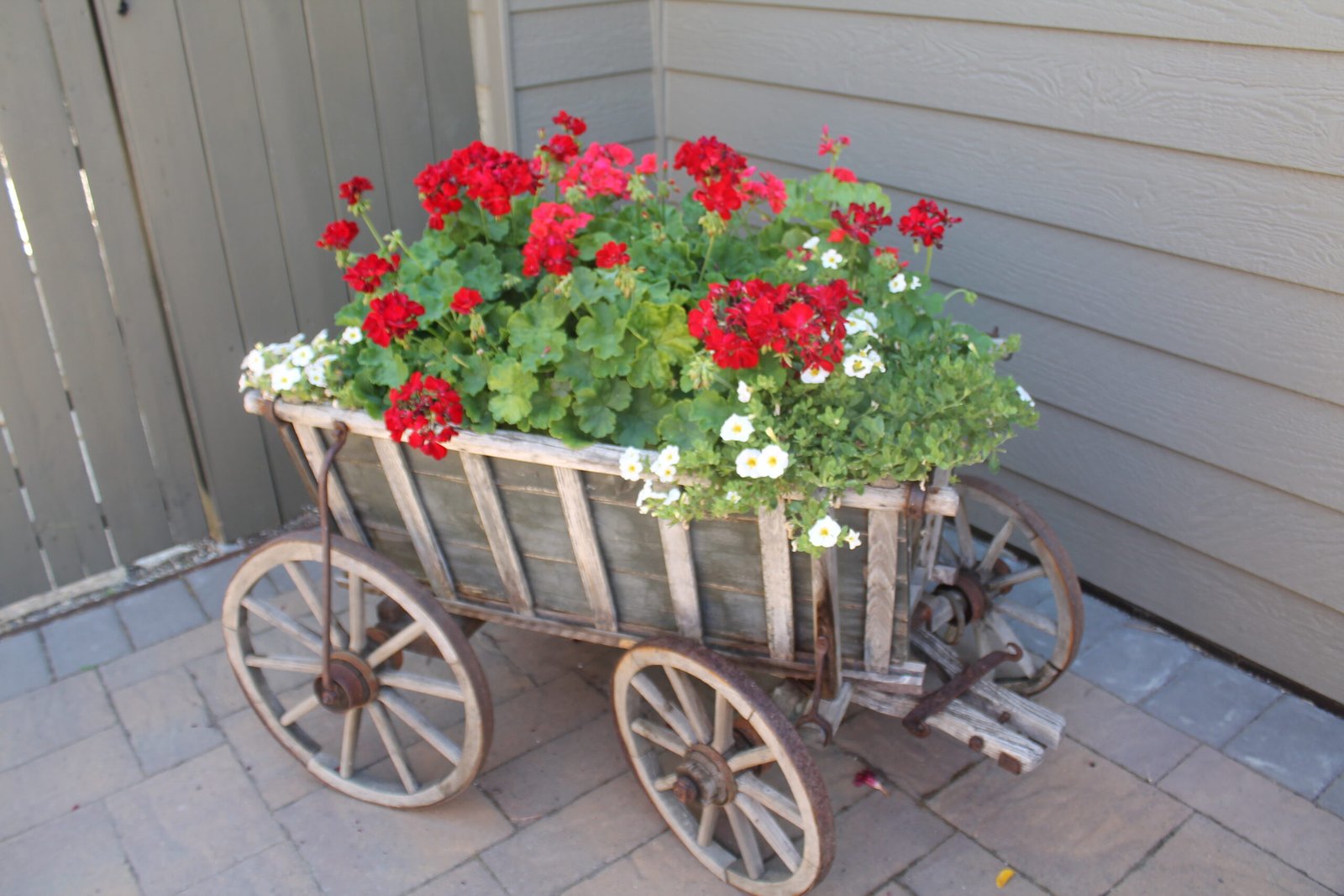

Growing up on a ranch an hour from town, it was ingrained in us to repair and salvage items. Our family was not good at tossing items when there was the possibility of fixing them. This was long before the instant gratification of internet, Amazon and Door Dash.
Early habits persist.
Thirty years ago, living in Corvallis, Oregon, I purchased an antique European cart. It served well as a unique and interesting flower container at the front door. Wooden sides were deep enough to hold an adequate amount of potting soil. Metal-banded wheels covered wooden spokes, and a long wood tongue had a small crossbar for pulling the cart.
All the various pieces of original metal and wood were intact, making it interesting to see how construction was done without screws, nuts, bolts and so much we take for granted.
My guess is this European cart was used in the late 1800s or early 1900s for carting produce to market or perhaps carrying the few possessions of a poor family from one location to another.
To help preserve the old wood from the dampness needed for plants, I lined the cart interior with clear plastic sheeting, adding holes for drainage through both the plastic as well as the wooden base. For winter protection, it was moved into the garage for dry storage.
It was inevitable that rain and dampness eventually caused rotting, especially of those bottom boards. The tongue fell off.
It was time for a decision — tackle major repairs or give it up.
By then, we had moved to Wenatchee in 2007. My husband Pat tackled the job of remaking the cart into a useable planter. He cut out the wooden bottom and replaced it with new wood. A few areas on the sides needed replacement. Any visible new wood was stained gray/brown to match the rest of the cart. Luckily, most replaced wood was hidden from sight.
For improved drainage, we drilled a large hole in the base and glued in a small can, open at both ends. That prevents drainage from touching any of the wood structures. That is, after I installed fiberglass in the entire interior of the cart, right up to the rim. No dampness from soil touches the cart itself, either on the bottom or cart’s vulnerable sides.
Eighteen years later, geraniums are thriving in the cart this summer! This attests to its continuing usefulness and beauty. Once fall sets in and flowers give in to winter, I will once again move my little gem into the shop for protection.
Last year, I left the geraniums in place and lightly watered them very infrequently; just enough to keep them alive. Overwintering plants like geraniums and cannas need minimal water; it is tempting to think we’re helpful to water frequently, but that promotes rotting.
Each spring, I’ve planted a variety of annuals in the cart, depending on how much sun or shade it would receive. It has been a nice receptacle for a variety of potted plants, each year a little different. A few I’ve grown include upright cannas with large leaves, tall or compact zinnias, fragrant heliotrope, geraniums of many types, calibrachoa, dark red coleus, ferny green asparagus fern, annual alyssum, begonias of various types, small grey artemisia and trailers such as lobelia, petunia and sweet potato vine. Sometimes I add small, spiky grass types but don’t remember which.
Compatible plants need similar moisture and light requirements.
I’ve concluded the more compact annuals show off the character of the cart better than tall or bushy plants that tend to overwhelm it. It’s a keeper no matter what is grown in it!
A WSU Chelan and Douglas County Master Gardener column appears weekly in The Wenatchee World. To learn more about your local Master Gardener program, visit bit.ly/wsucdmgprogram or call (509) 667-6540.