
Garden insects are for the birds
By Julie Banken
WSU Chelan/Douglas County Master Gardener
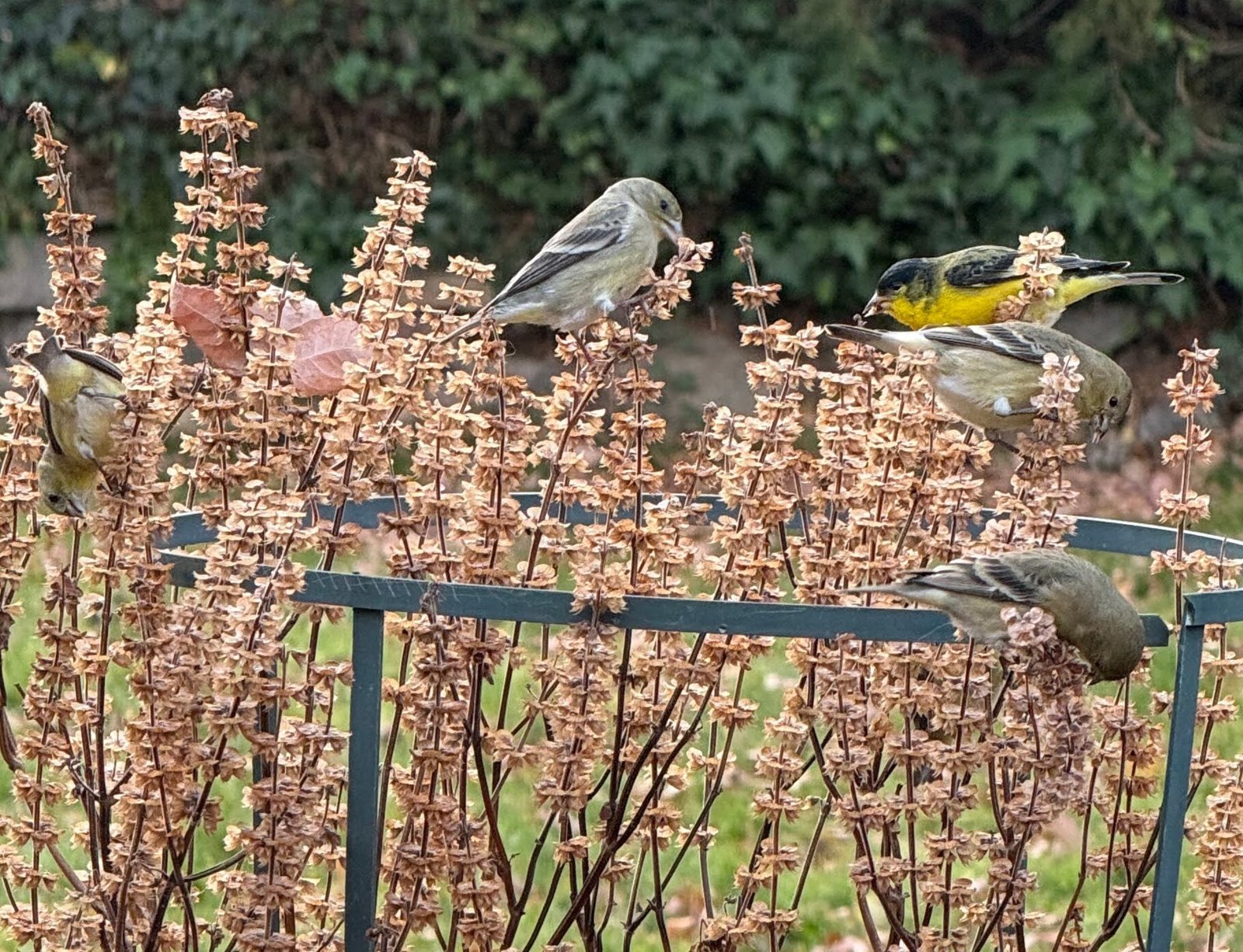

Today I had a fun surprise. I usually cut my basil plants down in the fall, but this year I let them go to seed. On this uncommonly warm winter morning, the dry plants were covered in goldfinches. I counted at least 10 birds at one time, busily feeding on the tiny seeds.
Although goldfinches are granivores as adults, they need insects to raise their young. In fact, it has been estimated that 96% of terrestrial birds depend on insects for successful reproduction. That is true even for seed-eaters like finches. Newly hatched chicks can’t eat hard seeds; they must have easily digestible, protein-rich food, so insects like aphids and caterpillars make the perfect diet.
Unfortunately, the soft-bodied insects essential to raising a new generation of birds are also considered to be garden pests. Hardware stores offer homeowners rows of shelves lined with synthetic pesticides, products formulated specifically to kill insects and other arthropods. Ironically, in the same store, the bird food aisle is often nearby. When you consider how important insects are, not just to birds but to the entire ecosystem, it’s hard not to question whether synthetic chemicals belong in home gardens at all.
In 2014, France recognized the impact insecticides were having on the environment. Their government passed a law which phased out the use of synthetic pesticides in both private gardens and public spaces. Today, with limited exceptions, residential areas as well as parks, cemeteries, school grounds, sports fields and sidewalks can no longer be treated with synthetic pesticides.
France went one step further in 2018, joining the rest of the European Union in restricting the outdoor use of a class of insecticides called neonicotinoids. Neonicotinoids, or “neonics,” are synthetic, nicotine-like neurotoxins. Even if insects don’t receive a lethal dose, exposure can lead to sublethal effects such as disorientation and reduced reproduction.
Whoever invented neonicotinoids certainly foiled herbivorous insect pests. While natural nicotine degrades rapidly, its synthetic cousins are long-lasting. Neonics persist in water for months and last even longer in soil. Depending on conditions, residue from imidacloprid, a common soil drench, can remain toxic for more than a year. Clothianidin, often used to coat seeds, persists even longer.
One of the reasons neonics are so effective is the fact that they are so water soluble. They are taken up through a plant’s roots and distributed systemically throughout its tissues, making the entire plant toxic. Even flower nectar and pollen grains become contaminated. Unlike other broad-spectrum insecticides, neonics can’t be washed off; they are on the inside, not the outside of a plant.
These systemic chemicals are extremely good at reducing populations of plant-eating insect pests. What manufacturers didn’t anticipate was their effect on other animals in the ecosystem. Pollinators like butterflies and bees become collateral damage when they eat treated pollen and nectar. With fewer insects to feed their chicks, bird populations decline.
Fortunately, birds in France are beginning to make a comeback. Studies show their numbers have increased in some areas where synthetic pesticides are restricted, indicating that even urban and suburban habitats can support wildlife where insects are allowed to exist. Here is good news: simply by not using insecticides, home gardeners have the power to make a big difference in the health of the ecosystem.
The goldfinches in my yard are lucky. Washington state is not banning neonicotinoids entirely, but starting January 1, our state will prohibit their retail sale, including products listing imidacloprid, clothianidin, acetamiprid, dinotefuran, thiamethoxam or thiacloprid as active ingredients. Licensed pesticide applicators will still be able to use them, but hardware stores will no longer carry neonics on their shelves.
Even if you aren’t applying them yourself, watch out for harmful chemicals that can sneak into your yard. Seeds can come coated in neonicotinoids to keep pests from feeding on plants throughout the growing season, and nursery plants are often potted in treated soil. Like Trojan horses, seeds and nursery plants can carry insecticides that will last for months, posing risks to insects as well as the birds that depend on them.
A WSU Chelan and Douglas County Master Gardener column appears weekly in The Wenatchee World. To learn more about your local Master Gardener program, visit bit.ly/MGchelandouglas or call (509) 667-6540.